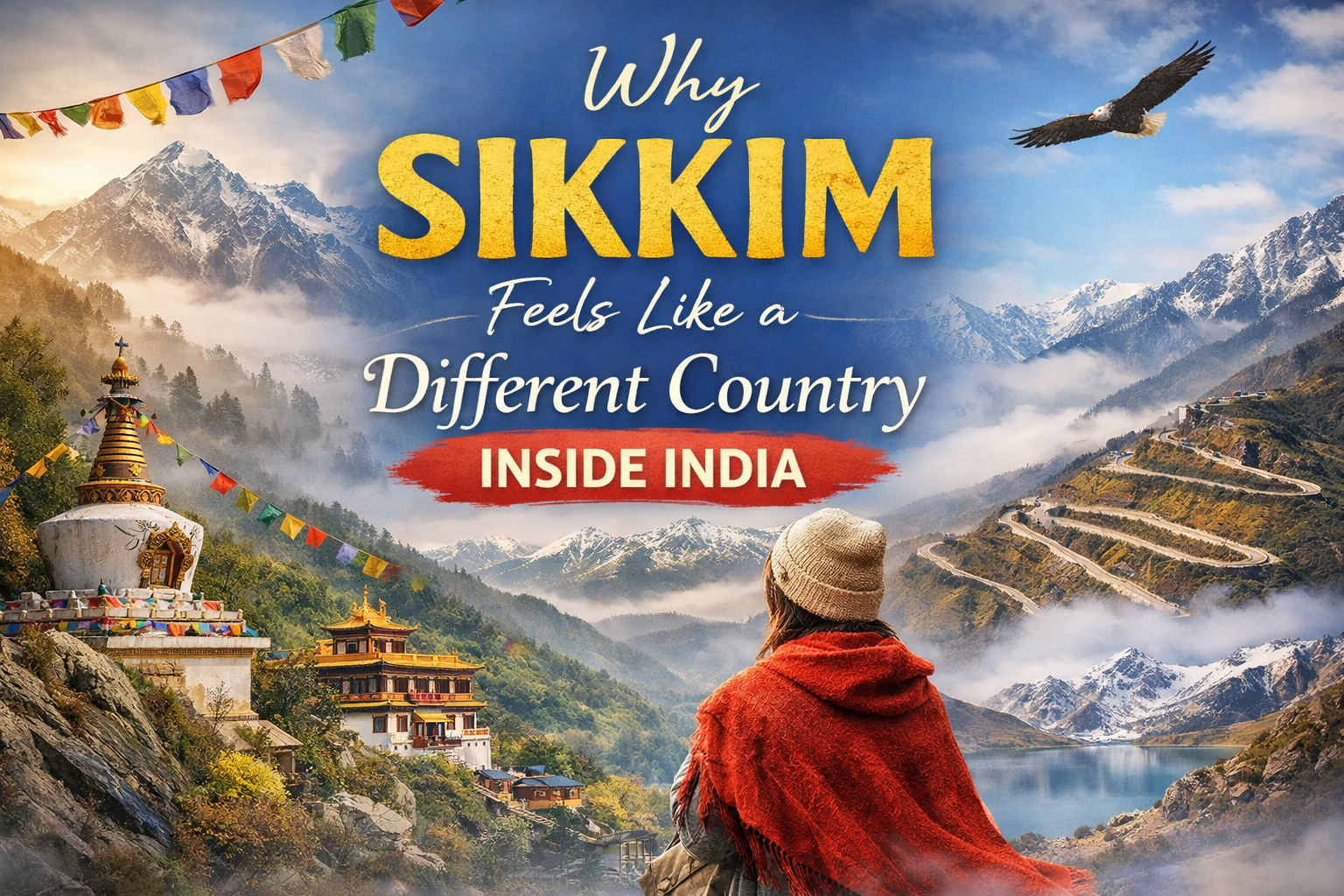
The moment you enter Sikkim, something feels different. It’s not just the mountains or the cooler air—it’s the rhythm of life. Roads are quieter, people speak softly, and even time seems to slow down. Many travelers say the same thing after their first visit: Sikkim doesn’t feel like anywhere else in India.
So what makes this Himalayan state feel like a completely different country inside India? Let’s unpack it.
A Culture That Feels Calm, Not Chaotic
Unlike most tourist-heavy destinations, Sikkim feels deeply balanced. The influence of Tibetan, Lepcha, and Nepali cultures creates a unique identity that’s visibly different from mainland India. Prayer flags flutter on mountain roads, monasteries sit peacefully on hilltops, and spirituality blends naturally into everyday life.
There’s no rush here—no honking traffic, no aggressive crowds. This cultural calm is one of the strongest reasons why Sikkim feels like a different country inside India.

Cleanliness That Shocks First-Time Visitors
Sikkim is India’s first fully organic state, and it shows. Streets are clean, plastic use is strictly controlled, and locals genuinely care about preserving nature. You won’t find garbage dumped beside roads or tourist spots.
For many travelers, this level of discipline and environmental awareness feels closer to a foreign country than a typical Indian hill station.
Landscapes That Change Every Few Hours
In Sikkim, scenery transforms dramatically as you travel. One moment you’re driving through dense forests, the next through wide alpine valleys, snow-covered passes, or quiet villages wrapped in clouds.
Places like Nathang Valley, Zuluk, Gurudongmar Lake, and Yumthang don’t just look scenic—they feel remote and untouched. This constant shift in terrain reinforces the feeling that you’ve crossed borders without realizing it.
A Different Relationship With Tourism
Sikkim doesn’t try to impress tourists—it simply exists. Homestays feel warm and personal, locals are helpful without being pushy, and commercialization is minimal in most regions.
Unlike overcrowded hill destinations, tourism here feels respectful. You’re a guest, not a customer. That alone explains why Sikkim feels like a different country inside India for so many visitors.
Food, Language, and Lifestyle Feel Distinct
From steaming momos and thukpa to fermented foods and butter tea, the cuisine feels closer to the Himalayas than the plains of India. Languages, clothing styles, and daily routines are equally distinct.
Life here starts early, ends early, and revolves around nature—not screens or schedules. For travelers used to fast-paced living, this lifestyle feels refreshingly foreign.
Rules That Actually Work
Permits, traffic regulations, environmental laws—everything in Sikkim is strictly followed. While this may seem inconvenient at first, it’s exactly why the state has preserved its beauty so well.
This structured approach to governance adds to the feeling that you’re in a place that operates differently—almost like a separate nation within India.
Final Thoughts
Sikkim doesn’t shout for attention. It doesn’t overwhelm you with attractions. Instead, it quietly pulls you in. The culture, cleanliness, landscapes, and mindset combine to create an experience that feels unfamiliar in the best possible way.
That’s the real answer to why Sikkim feels like a different country inside India—because it has chosen to grow slowly, protect fiercely, and live mindfully.
At Tripoventure, we believe Sikkim is not just a destination but a feeling—one that stays with you long after the journey ends. If you’re looking for a place that changes how you travel, not just where you go, Sikkim is waiting to be discovered.